
How Arrest Warrants Work in Connecticut
A Connecticut arrest warrant is a judge's order telling law enforcement to bring someone into custody. Police or a prosecutor files an application once an investigation is far enough along, and the judge weighs the supporting information, including probable cause, before signing. The signed order belongs to the criminal case at its assigned Superior Court location, not to a county sheriff's office. Connecticut runs its criminal cases through Superior Court at Geographical Area (GA) and Judicial District (JD) locations. The GA sites handle many arraignments, misdemeanors, motor-vehicle cases, and required infraction appearances, while the JD sites take major criminal matters and other district cases. The docket location tells you which clerk keeps the file.
Connecticut Arrest Warrants Move Through Review
Police in Connecticut investigate and pass what they gather to a prosecutor. The Division of Criminal Justice overview explains the State's Attorney's independent review: approve a request, ask for more investigation, or decline it. A judge then reviews the application itself. That sequence does not make every application public. Under Connecticut's §54-2a, Superior Court judges and designated judge trial referees issue criminal process and may set release conditions. Search warrants follow a different sworn-complaint and probable-cause provision under §54-33a. Do not apply that specific rule to every arrest, failure-to-appear, or civil-capias process. The statutory chapter lays out these warrant provisions.
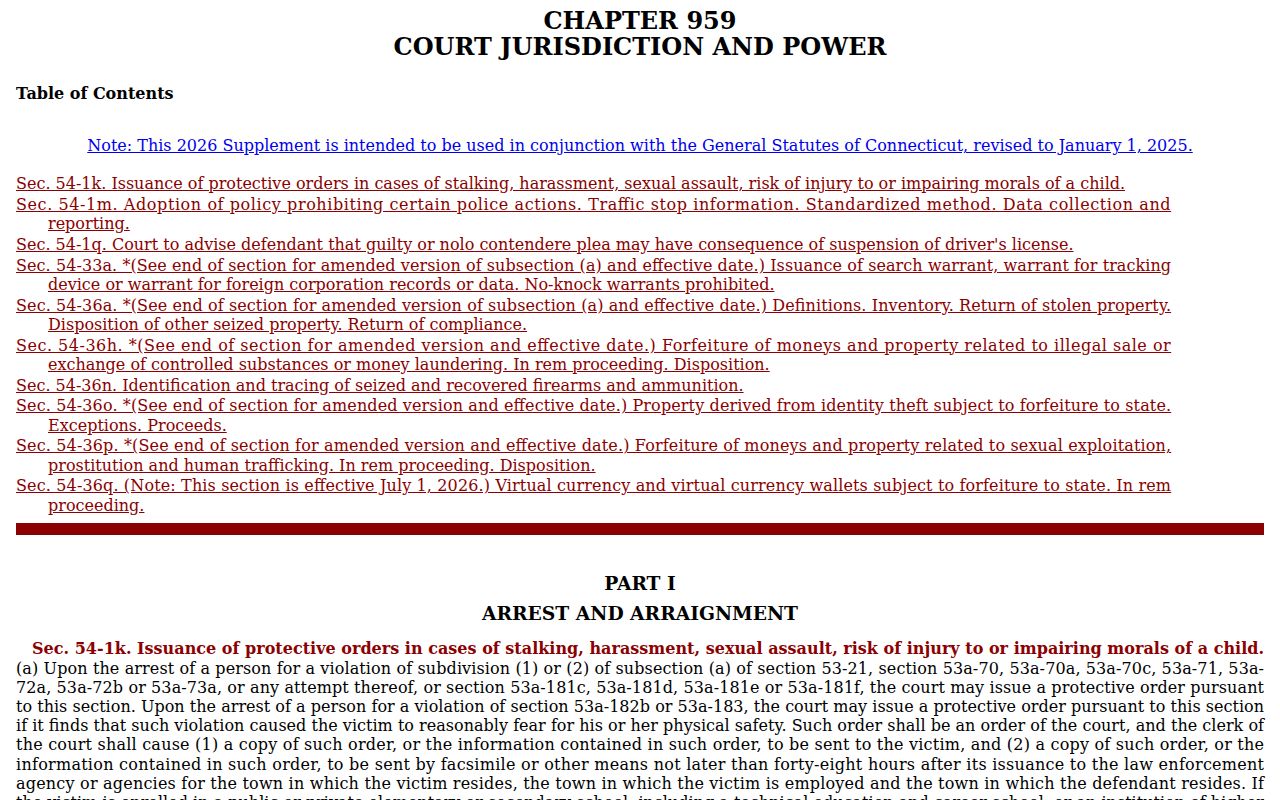
Issuance is a judicial act. Connecticut police or State Police carry out criminal service.
Arrest Warrants: What They Contain
Connecticut publishes no general warrant-record schema and no confirmed warrant-number format. A docket number helps a clerk pull up a case, but it is not a warrant number. The table below separates case information you can see from fields no reader should infer.
| Case identifier | The Connecticut docket may show a case number, location, category, and events. No public warrant-number pattern is confirmed. |
|---|---|
| Issuing authority | Superior Court judge or authorized judicial authority; the assigned GA or JD clerk maintains the case file. |
| Basis and charge | Depends on the case. A docket label does not establish the full allegation or affidavit contents. |
| Application or affidavit | After arrest, it may be part of the arrest record under C.G.S. §1-215, subject to seal and exceptions. |
| Bond or release | Connecticut release terms are case-specific; no general arrest-warrant bond schedule exists. |
| Service and status | Details are restricted to authorized systems. Connecticut has no public statewide status-code list. |
For a Connecticut copy request, identify the case and ask its custodian what can be released. A blank portal result does not establish bond, the service agency, or a clearance date. The Connecticut Insurance Department's bail-bond guidance covers regulated surety agents and rates, not a statewide warrant bond schedule.
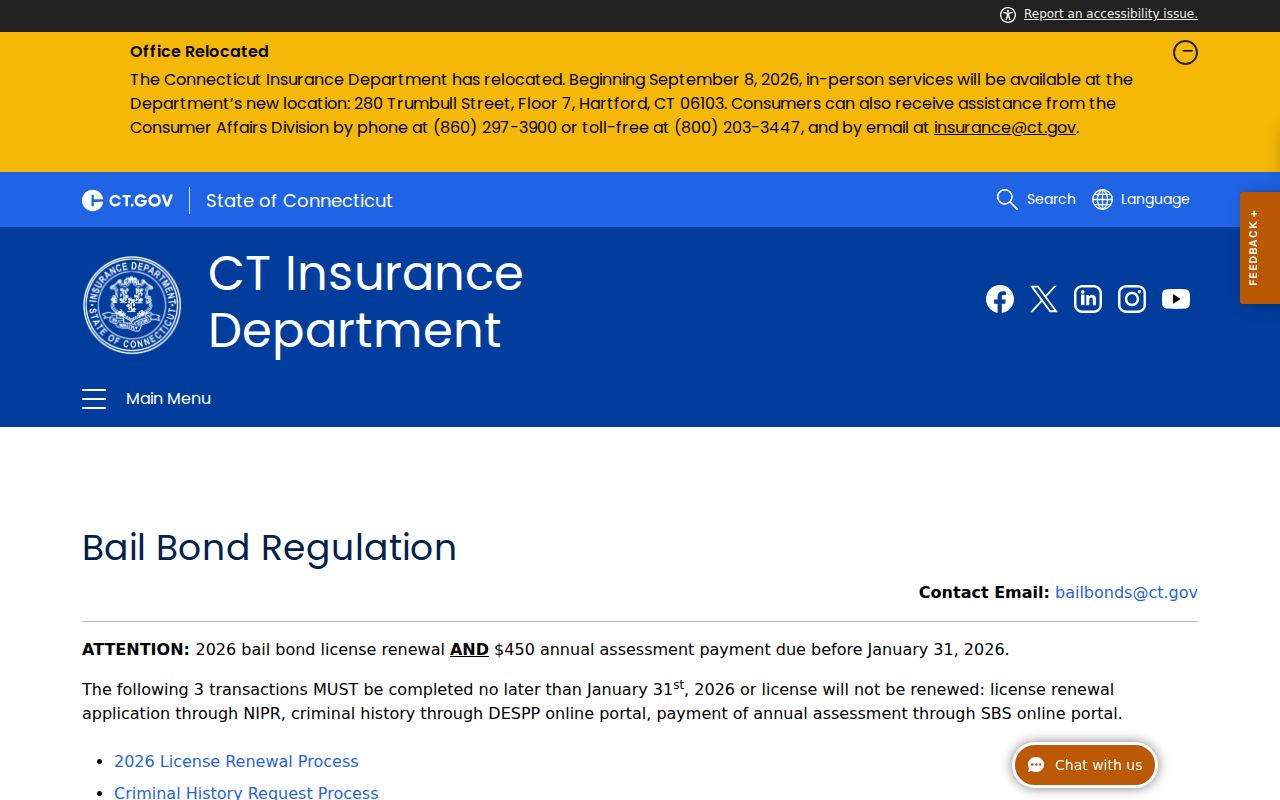
The court's order sets the release condition in the individual case.
Connecticut Arrest-Warrant Numbering Is Not Public
Connecticut does not publish a warrant-numbering scheme. The Judicial Branch pending criminal and motor-vehicle case search can show a docket number with location, case type, year, and sequence, but that is case information, not a full warrant file. An entry appearing online is no certification that the service system caught every update. So use the case lookup to find the court, then ask that clerk whether the order is still active. The case-display disclaimer spells out the docket's limits, and the Judicial Branch case-lookup page lists the public case routes along with their categories.
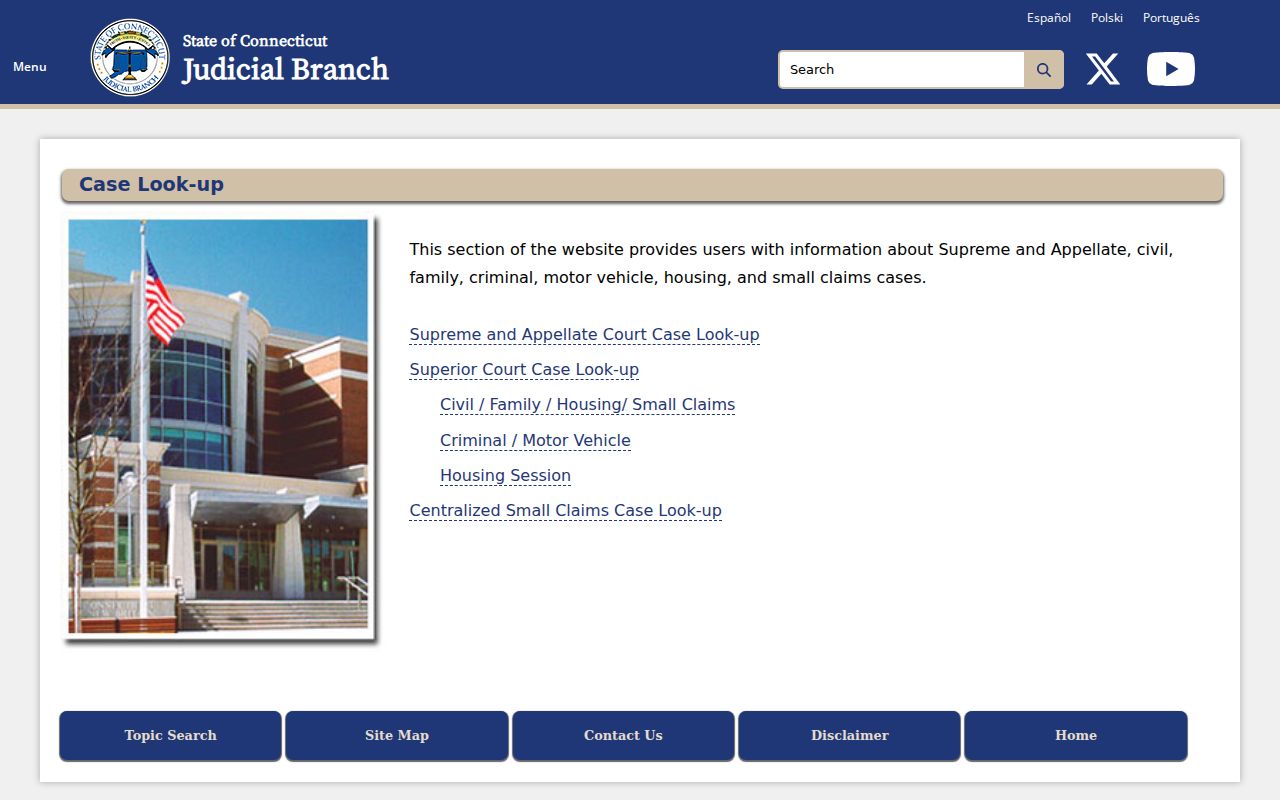
A docket locates a file. The court and the responsible police agency separately confirm judicial and service status.
How Warrants Get Served in Connecticut
Who actually serves a Connecticut warrant depends on the agency. Local police departments and the Connecticut State Police (CSP) execute criminal warrants, with municipal departments handling their own communities and sometimes statewide process. CSP works its own matters, backs up local agencies, and covers towns with no police department. Connecticut has no county sheriff offices. State marshals serve civil process and some civil capias orders, as the Commission's FAQ explains, though that is not ordinary criminal service. Judicial Marshals run courthouse security and prisoner movement. Service details stay in agency records rather than a public status code.
| Office or agency | Role in Connecticut process | What to confirm |
|---|---|---|
| Local police | Criminal process and local investigations. | Whether the department is responsible and what its record shows. |
| Connecticut State Police / DESPP | State investigations, service, and local-agency support. | Whether CSP is responsible; DESPP has no public full warrant search. |
| State Marshal Commission | Civil process and certain family capias service. | Whether the order is civil; not the criminal-warrant route. |
An arrest on a Connecticut warrant hands the person over to custody, and release then follows court orders and the law that applies. Timing and place vary case by case. There is no statewide surrender desk, so work out the details with counsel or the issuing court.
Connecticut Arrest Warrant Records After Arrest
Once an arrest happens, Connecticut's public-record rules kick in. FOIA carries a general public-record rule at C.G.S. §1-210 and a specific arrest-record rule at §1-215, so the record can include the warrant application or affidavit unless it is sealed or otherwise exempt. A sealed application may be withheld in whole or in part. Ask the office holding the file whether §1-215 applies and how to request what can be released. Chapter 14 holds the Connecticut FOIA text, and a docket copy or incident report may be a different record from the affidavit. The DESPP Reports and Records page covers eligible State Police report-copy requests and its case-related search fee. This is post-arrest access, not a pre-arrest list of unserved warrants.
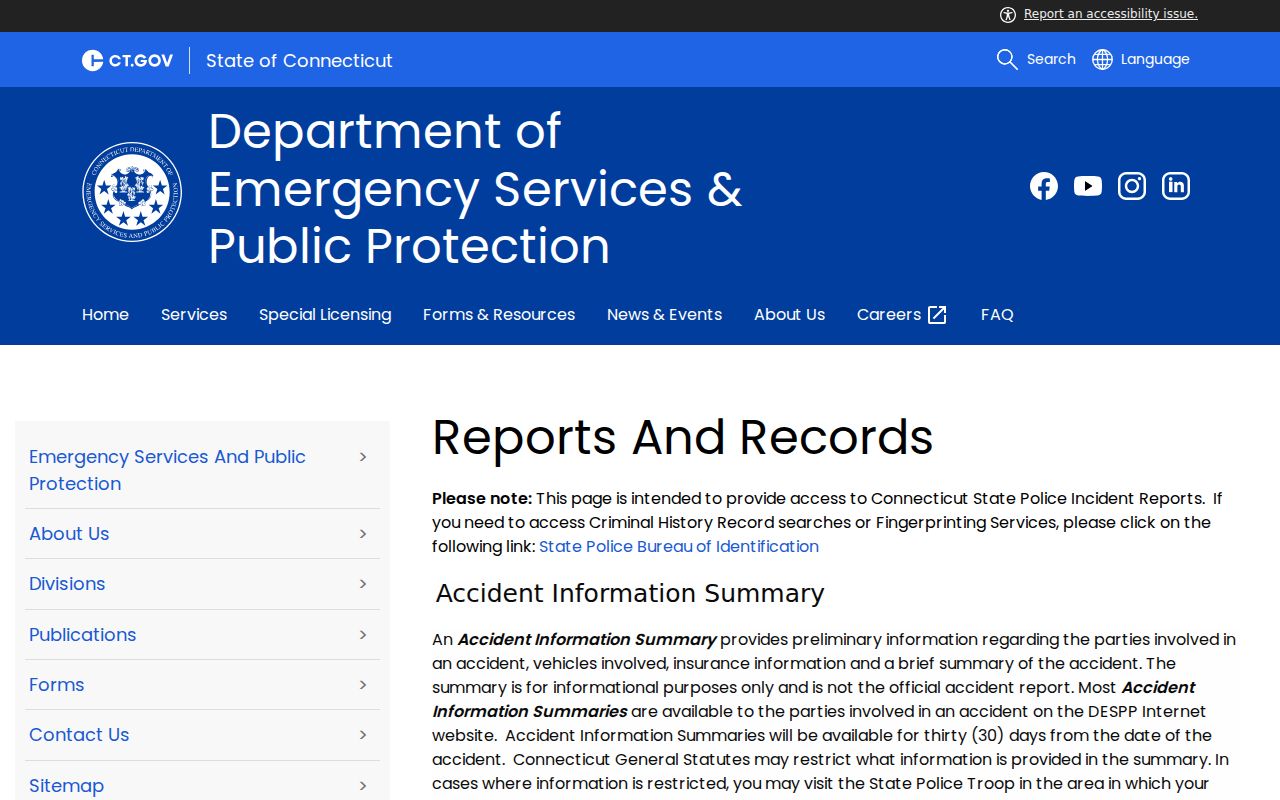
DESPP's posted $16 case-related search fee applies whether or not a report is produced, and it is not a live-warrant fee. Local police report requests in Connecticut go through each department's own public-record process.
Arrest Warrants, Summonses, and Bench Warrants
These terms describe different forms of process. A Connecticut arrest warrant authorizes custody. A summons directs a response or appearance under its terms. A bench warrant is court-issued process, often tied to a missed appearance or another unmet obligation, and Connecticut uses one Superior Court criminal system, so the assigned location is what matters.
| Feature | Arrest Warrant | Summons | Bench Warrant |
|---|---|---|---|
| What it does | Authorizes arrest in the Connecticut criminal matter. | Calls for a response or appearance under its Connecticut terms. | Orders arrest in response to a Connecticut court obligation or nonappearance. |
| Usual trigger | Application arising from a Connecticut investigation into an alleged offense. | A Connecticut charging or court process that sets a response or appearance. | A missed date, failure to comply, or another Connecticut court-directed basis. |
| Record route | Issuing Superior Court and responsible police agency. | Case document and assigned court or office. | Issuing Superior Court and responsible police agency. |
| Next question | What is the current order, release condition, and appearance process? | What does the notice require, and by what date? | What court action will recall or resolve the process? |
Not every Connecticut court paper is a warrant. A summons just sets a court date. An arrest warrant and a bench warrant are different tools as well, and the clerk can name which document you face and when it is returnable. The bench warrant lookup walks through the Connecticut FTA process. Federal cases run on a separate track, and the U.S. District Court for the District of Connecticut page lists its courthouse locations and clerk routes.
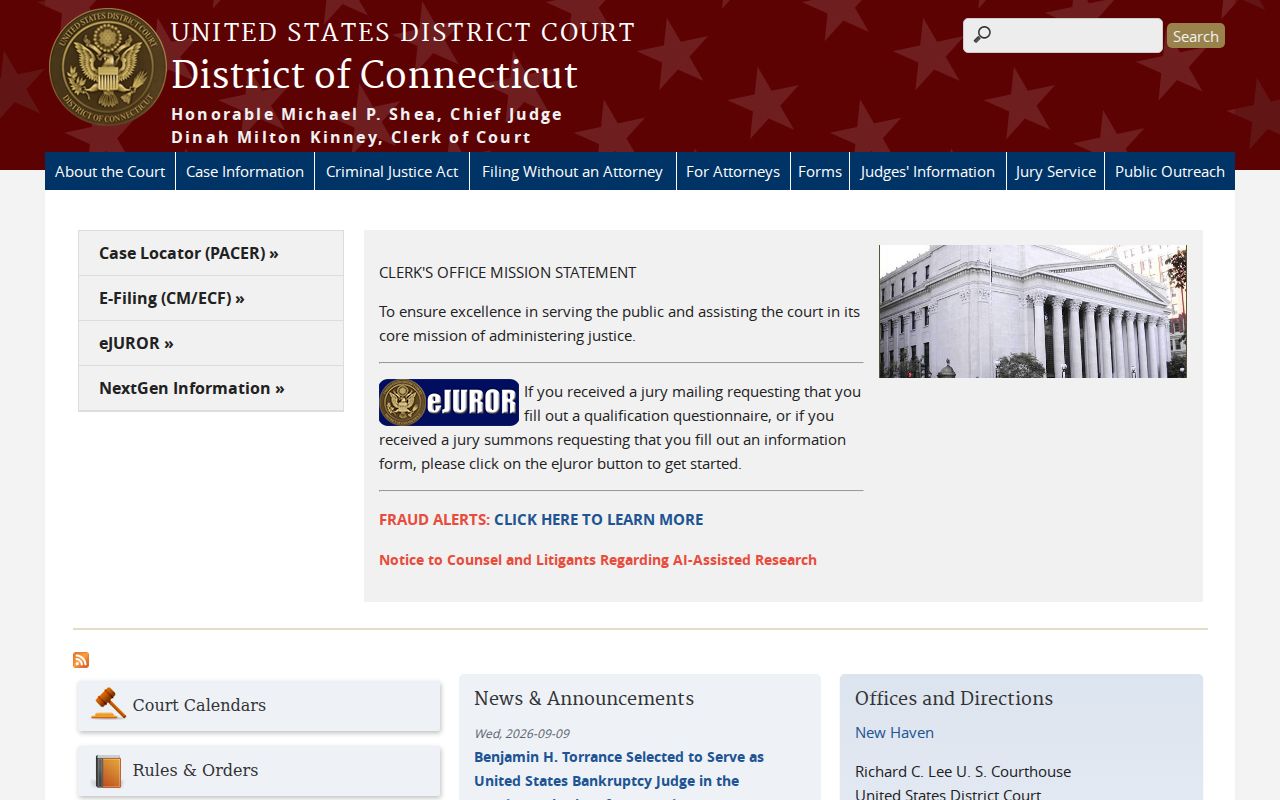
Federal matters never land in Connecticut Superior Court. PACER may carry public federal docket material, but it is not a warrant check before service. Courthouses in Bridgeport, Hartford, and New Haven handle the federal side. For a Connecticut case, stay with the GA or JD clerk.
Connecticut Arrest Warrants Move Through Restricted Systems
Connecticut keeps its warrant systems largely closed. The Connecticut Judicial Branch's Paperless Arrest Warrant Network (PRAWN) lets authorized agencies run warrant inquiry and custodial processing, with court records flowing into the Criminal Motor Vehicle System and out to agency screens. Access is restricted. Residents cannot search its service records. For certain rearrest and violation-of-probation warrants entered in the network, C.G.S. §54-2d puts a duty on the law-enforcement agency in the accused person's Connecticut municipality of residence to log actions taken within 30 days. That duty is internal. It covers those warrant types only. No public update is promised within 30 days. The public Arrest Warrants portal takes a different slice of Connecticut data, offering selected VOP and order-to-incarcerate information under C.G.S. §54-108c. Its notice says FTA warrants stay off the screen until further notice, and other types are missing too. That portal sits apart from PRAWN, and a blank search there is not a person record.
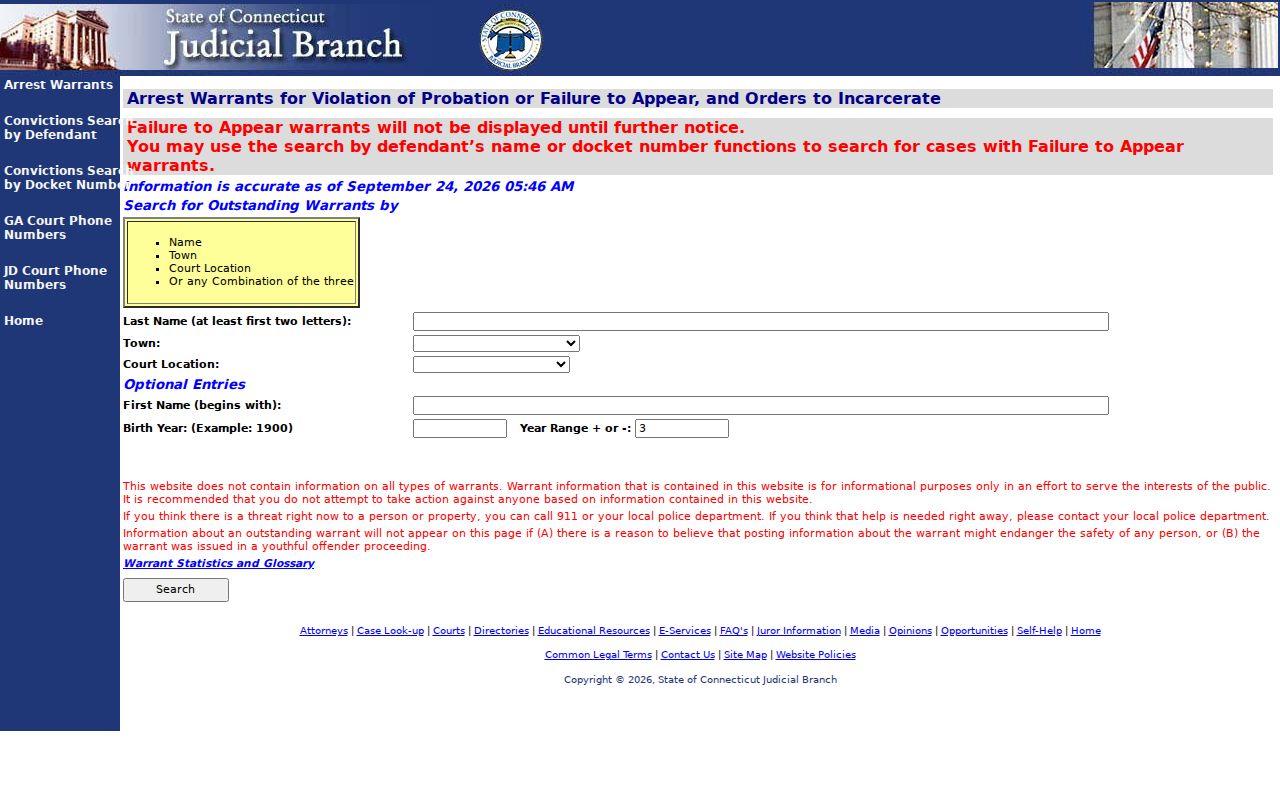
A public result is only a lead. It is not the full answer on any Connecticut warrant. Confirm with the assigned GA or JD Clerk's Office and with the local police or CSP unit responsible for service.
Connecticut Arrest Warrants Outside the Public List
Plenty of Connecticut arrest warrants never show up in the public violation-of-probation search. The omissions reach beyond warrant types. Its notice says FTA warrants are left out too. A blank result proves nothing about whether an order exists, was recalled, or got an agency update. Start with the docket, then ask the GA or JD clerk what process is active. Ask which Connecticut police department or CSP unit serves the warrant. VOP questions go to the assigned Adult Probation office or Court Support Services. PRAWN support only fixes agency system problems, not personal case checks.
Handling an Arrest Warrant in Your Name
If a Connecticut arrest warrant might carry your name, search the public systems first, then verify judicial and service status on separate tracks. The VOP portal is partial. So is a pending docket. A lawyer can ask about release terms and arrange an appearance or a motion, while the clerk routes questions but cannot give legal advice.
- Search the public portal and pending criminal or motor-vehicle docket for a lead, not a final answer.
- Ask the assigned GA or JD clerk whether a Connecticut arrest warrant is active, what case it concerns, and whether bond or another release condition is set.
- Ask which local police department or CSP unit handles service; confirm that agency's execution or custody record.
- Discuss surrender, bond, or a motion to recall or quash with counsel. Connecticut has no universal surrender location.
- Keep the court order or release record and confirm the court and service agency updated their files.
Use Warrant Check for public tools and Browse Counties to route by town, and let the Judicial Branch directory pinpoint the assigned clerk. Counties in Connecticut are geographic navigation, not criminal jurisdictions.
Important: Before arranging surrender, bond, or a motion to recall or quash, contact counsel where possible; ask the issuing court and responsible police agency what process applies.
Recall means the Connecticut court withdraws the warrant. Quash means it sets the process aside. An old docket event is not proof of clearance, so keep the order on file and confirm the service agency updated its record.