
Connecticut Warrant Searches
Start a Connecticut warrant search with the Judicial Branch's public Arrest Warrants page. That page offers a limited lookup by name, town, and court location. It is not a full index of unserved warrants. A pending criminal or motor-vehicle docket can still help. It may identify a case and its Superior Court location. But a docket event is not a live service-system check. Judicial status rests with the issuing court, while local police or Connecticut State Police may hold the service record. If the matter involves your own name or a relative's case, gather details first: full name, date of birth if known, and any docket number. Then contact officials. Treat the public tools as leads, and confirm the court order and the agency responsible for service. A blank search is not clearance. Consider talking with a lawyer before taking steps on a possible warrant.
- Search the Judicial Branch VOP, FTA, and OTI page by the required surname, then narrow by town or court location when useful.
- Look up a pending criminal or motor-vehicle case by docket number or defendant fields if you need the case location or public events.
- Open Browse Counties to orient by the town or historic-county route, then identify the relevant Superior Court GA or JD and local police agency. These routes are geographic aids, not sheriff jurisdictions.
- Ask the assigned clerk about current judicial status and ask the responsible local police or CSP agency about its service record.
- If a warrant may be active, ask a lawyer about the court’s available process before arranging an appearance or bond.
What Connecticut’s VOP Portal Leaves Out
The Judicial Branch public portal covers only outstanding VOP, FTA, and OTI matters, so it is not a statewide register of Connecticut criminal warrants. On September 24, 2026, the live notice said FTA warrants would stay off the display until further notice. It also says plainly that not every warrant type appears, and it warns against acting on a listing. No account and no fee are required. You get no county or agency filter either, and the form offers no promise of regular refreshes, no result total, no export, and no pagination. Town and court-location choices describe court geography, not the police agency that may serve a warrant. Entries drop when publication could endanger someone, and youthful-offender proceedings stay out. A match there is never the whole picture of Connecticut records, so bring any detail to the assigned clerk and the responsible agency. The official VOP form shows the public fields and the FTA notice.
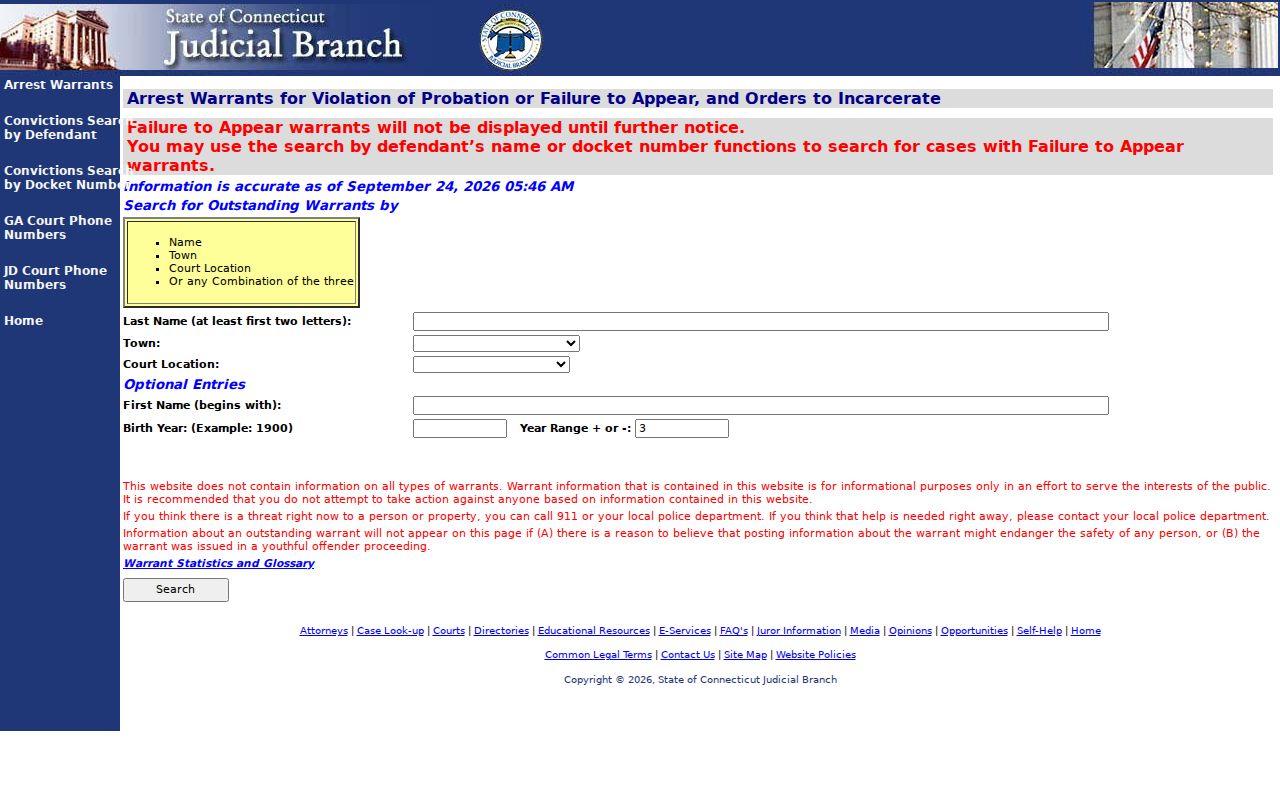
Narrow a permitted Connecticut search with the visible options, then verify the result with the court before treating the screen as a final status record.
What a Connecticut Warrant Search Asks For
The VOP page is a form for finding a limited public entry, not a query against a full Connecticut warrant database. A surname is required and needs at least two letters. Other fields can narrow things. But there is no warrant-type, case-number, agency, county, charge, bond, or issue-date filter. A town selection is not a county selector or a list of local police custodians, so read it carefully.
| Field Label | Type | Required | Notes |
|---|---|---|---|
| Last Name | Text | Yes | Enter at least the first two letters; the page sets a 30-character maximum. |
| Town | Dropdown | No | Alphabetized Connecticut place labels and Out of State; not a county or agency list. |
| Court Location | Dropdown | No | Choose a listed GA, JD, or community-court location; no police agency values appear. |
| First Name | Text | No | Matches a name prefix rather than requiring a full first name. |
| Birth Year | Year | No | Four-digit year can help separate similar names. |
| Year Range + or - | Number | No | Optional range around the birth year; no maximum is stated. |
Use accurate details. No reset, download, or pagination controls exist. Check a name match against the Connecticut court record before treating it as your case.
A Connecticut Docket Cannot Clear a Warrant
The pending criminal and motor-vehicle lookup can find a case, its location, category, and public events. Search by docket number or defendant fields. A last-name prefix is required. First initial, birth year and range, court location, and category are optional. Categories include criminal, motor vehicle, and referred matters. There is no county or agency selector, and no active-warrant field.
The Judicial Branch itself says its online case view is not the official record. A docket event does not show whether a separate warrant remains in force. Restricted events may be absent as well. The clerk can confirm the court file. The responsible police agency answers for its own service record. The blank criminal and motor-vehicle search form displays the case categories and filters without exposing any person's Connecticut file, so use it to find a docket location and follow up with the court.
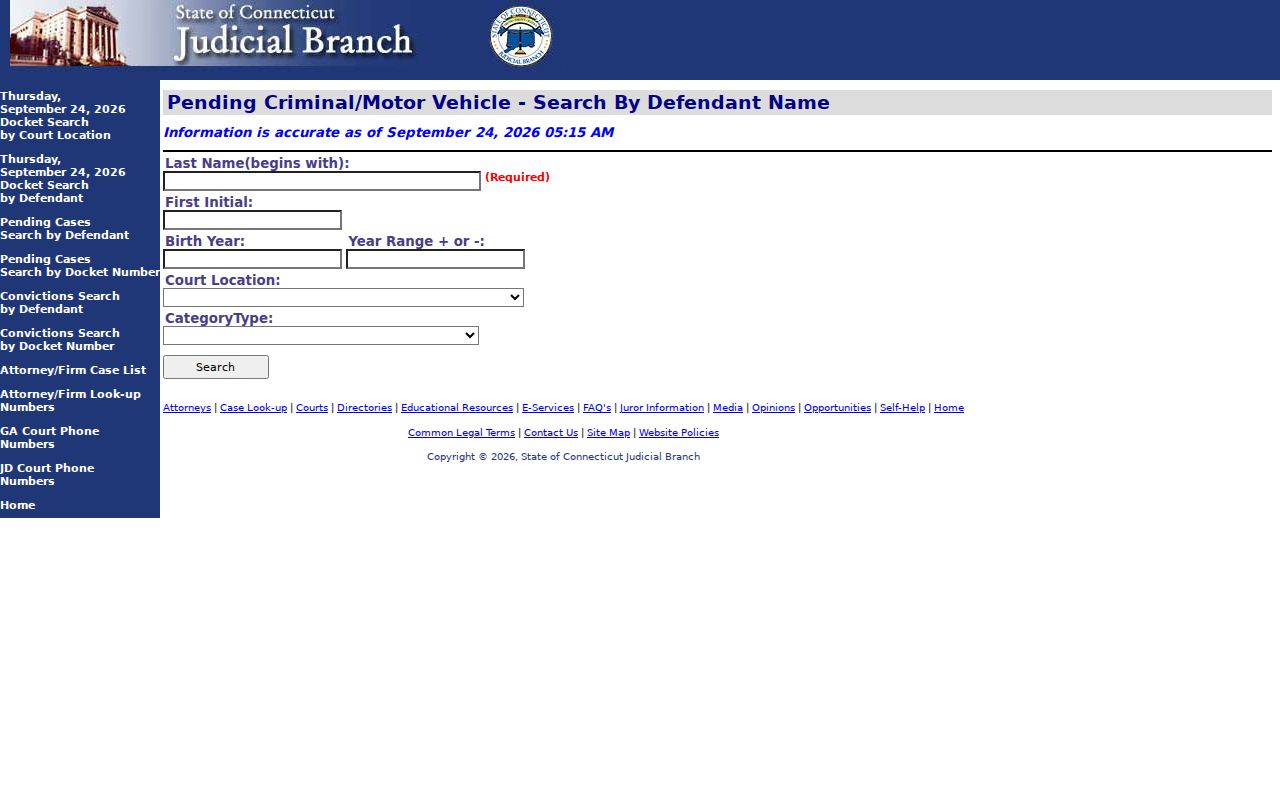
A Connecticut docket search can point you to the right clerk, but it is not a warrant-clearance certificate or proof that an agency received a recall.
Connecticut Warrant Search Results
Connecticut publishes no single public warrant schema. The VOP portal's query fields are known, but individual results vary. The statute allows specified VOP information to be published, and quarterly reports define aggregate fields. Neither promises that every result carries the same details. So do not infer an arrest agency, bond, charge, warrant number, update date, or clearance status from a portal hit.
| Name and address | The VOP statute allows specified subject information; no sample row was opened to confirm a particular display. |
|---|---|
| Court and issue date | Quarterly aggregate reporting describes issuing court and warrant issue date, but does not create a live status record. |
| Warrant number | Not confirmed No universal public identifier or format was found. |
| Docket number | Identifies a court case and helps a clerk find a file; it is not a statewide warrant number. |
| Charge and bond | Not confirmed as standard public VOP result fields. Ask the court about the case-specific record. |
| Service and status | No public statewide code list or universal warrant-number format was found; verify current status with court and agency. |
Words like active, served, recalled, and quashed describe a warrant's status, but only the Connecticut court or agency holding the record can confirm it. A docket number pulls up a case file. It is not a warrant ID.
Connecticut Ticket and Warrant Status Differ
Connecticut's ticket portal is not an arrest-warrant search. The Centralized Infractions Bureau (CIB) page asks for the full ticket number and its check digit, plus the first three letters of your last or company name. Timing matters. Electronic tickets may take three to five business days to appear, while handwritten tickets can take five to seven. CIB handles responses and payments on eligible tickets, and it does not carry warrant or DMV status. Answer date passed? Contact CIB or the court named on the notice. A DMV suspension notice is a separate matter. It involves its own court reopening and license-status steps. The Superior Court notifies DMV electronically when a ticket reopens, but DMV status concerns driving privilege, not whether another Connecticut warrant exists. Neither a CIB response nor a DMV notice can confirm that a Connecticut criminal warrant exists or has been recalled.
Connecticut Warrants: Who Holds What
Connecticut runs one Superior Court system. Courthouses sit at Geographical Area (GA) and Judicial District (JD) locations, with no county courts, no sheriffs, no city criminal courts, and no justice-of-the-peace criminal tier. The Judicial Branch directory locates the clerk. Service falls to local police or CSP when they carry that duty. Ask the clerk about the file. Ask which agency serves it. The public case-category page lays out Connecticut's court structure, and the town or municipality can identify local police, since no county warrant desk exists.
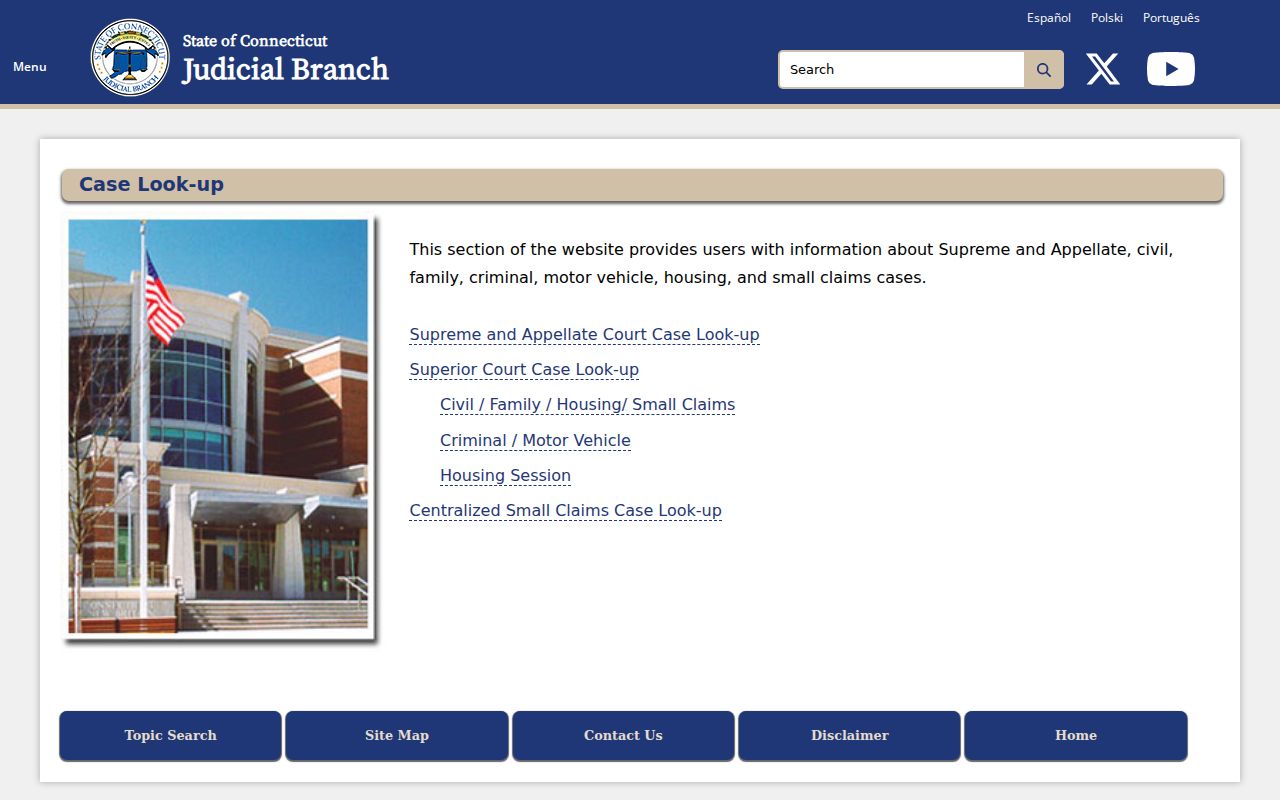
The public court categories map Connecticut's case routes. The clerk and serving agency still depend on the specific matter.
Connecticut Police Records Follow the Custodian
Police records follow the custodian. A local department or CSP may hold an incident or service record that never touches the VOP page. Connecticut's Freedom of Information Act governs covered agency records, exemptions and all. C.G.S. §§1-210 and 1-215 sit inside it. Section 1-215 addresses specified arrest records after an arrest, but it creates no public search of unserved warrants. A released copy is not live warrant confirmation. DESPP's GovQA Reports and Records channel takes eligible Connecticut State Police requests. The published case-related search fee runs $16, plus a possible vendor convenience fee. Ask the department or DESPP custodian about its file. Ask the Superior Court clerk about the judicial order. The DESPP records-request page shows the separate access route and fee notice; its form requests records, not a Connecticut warrant roster.
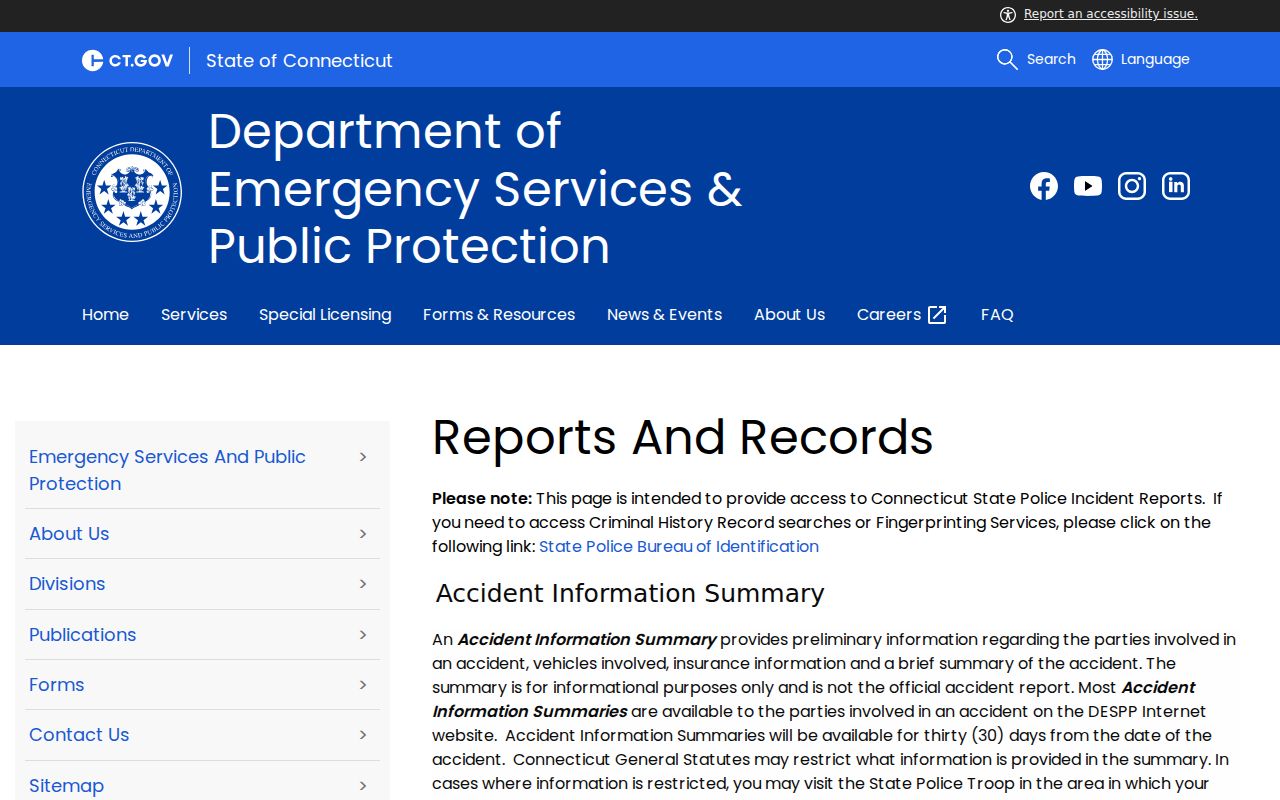
For an agency-held record, contact that agency's records office. For current judicial status, call the issuing Connecticut GA or JD clerk, and never assume one answer from the other.
Which Connecticut Warrants Stay Restricted
Access depends on the proceeding and safety concerns. The VOP page may omit a warrant when publishing it could endanger someone. It also excludes youthful-offender proceedings. Juvenile matters carry separate confidentiality rules. A judge may seal an application or a related record, and Connecticut agency files can sit under exemptions, so a blank result may reflect those limits, the portal's narrow scope, or the FTA suppression notice rather than the absence of a warrant.
Key Rules:
Connecticut’s public VOP page is not a complete warrant list, and its current notice says FTA warrants are not displayed until further notice.
Safety exclusions, youthful-offender and juvenile protections, and sealed material can keep a record out of a public result.
A blank portal or docket result does not establish that no warrant exists or that a warrant has been recalled.
For your own matter, call the assigned Connecticut Superior Court clerk and the responsible local police or CSP agency. Do not act on public information against another person. The portal itself warns against that use.
Connecticut Warrant Checks Keep Processes Separate
Family or civil capias process is not a criminal arrest warrant. Connecticut routes it through the State Marshal Commission's civil-service structure. Criminal process is different. Connecticut Superior Court issues it, and local police or CSP serve it. Ask the court which kind of process sits in the file before using a criminal portal on a civil matter. PRAWN supports warrant inquiry and electronic custodial processing. Only authorized agencies get in. No public login, county selector, or resident lookup exists. COLLECT, CISS, and NCIC are protected channels too. Federal process is separate yet again. Public PACER or RECAP docket material may help locate a federal case, though sealed or unfiled warrant material will not appear there. Federal status belongs to the federal court and the U.S. Marshals District of Connecticut, not the Connecticut portal. Confirm every lead with the office that keeps the record.