
How Bench Warrants Work in Connecticut
A bench warrant is a court's order to arrest someone who skipped a court obligation. Connecticut handles the process inside the Superior Court case where the person was supposed to appear or comply. Miss a criminal hearing, and the court may issue a rearrest warrant or a capias. Contempt and other order violations can draw process too. A violation of probation runs on its own track under C.G.S. §53a-32. Keep one thing straight, though: a missed date does not mean a warrant was issued. Some Connecticut ticket defaults go through the Centralized Infractions Bureau or get reported to DMV, and the court simply requires an appearance. Not every default ends in arrest process. Family-support matters raise a different question again, since Connecticut courts often treat those as civil contempt rather than a criminal bench warrant. The issuing docket and its current order decide which process applies, which is why the clerk of that docket is the person to ask.
FTA Charges and Connecticut Bench Warrants
In Connecticut, FTA stands for failure to appear. Missing a required court date is what the label means, plain and simple. The court may issue process to bring the person back, but the state can also charge the missed date itself as a separate offense under C.G.S. §§53a-172 or 53a-173. Those are two different questions. Whether a warrant exists is one thing; whether a prosecutor filed a separate FTA charge is another. A docket entry on the underlying case answers neither by itself. Connecticut statutes also reach only specified willful failures to appear, not every missed appointment, ticket response, or late payment. So ask the assigned clerk two things: did the court issue a rearrest warrant or capias, and does a separate charge appear in the case record? If probation is involved, ask the Adult Probation or Court Support Services office about its VOP process as well.
Bench Warrant Issuance in Connecticut
Who can issue this process in Connecticut? Superior Court judges, plus designated judge trial referees. Under C.G.S. §54-2a, a judge issues a bench warrant on a prosecutorial official's application backed by an affidavit showing probable cause, and in an FTA matter a capias can stand in for a rearrest warrant in specified circumstances. The exact order depends on the case and the court's authority. Once issued, the order goes into authorized criminal-justice systems for law-enforcement use, and Connecticut court staff keep the case-side record. That electronic entry does not open the full record to the public. The statute gives the warrant entry legal significance for law enforcement and requires that a copy be provided at arrest. For the controlling process language, the Connecticut General Statutes chapter on court jurisdiction and warrants sets it out.
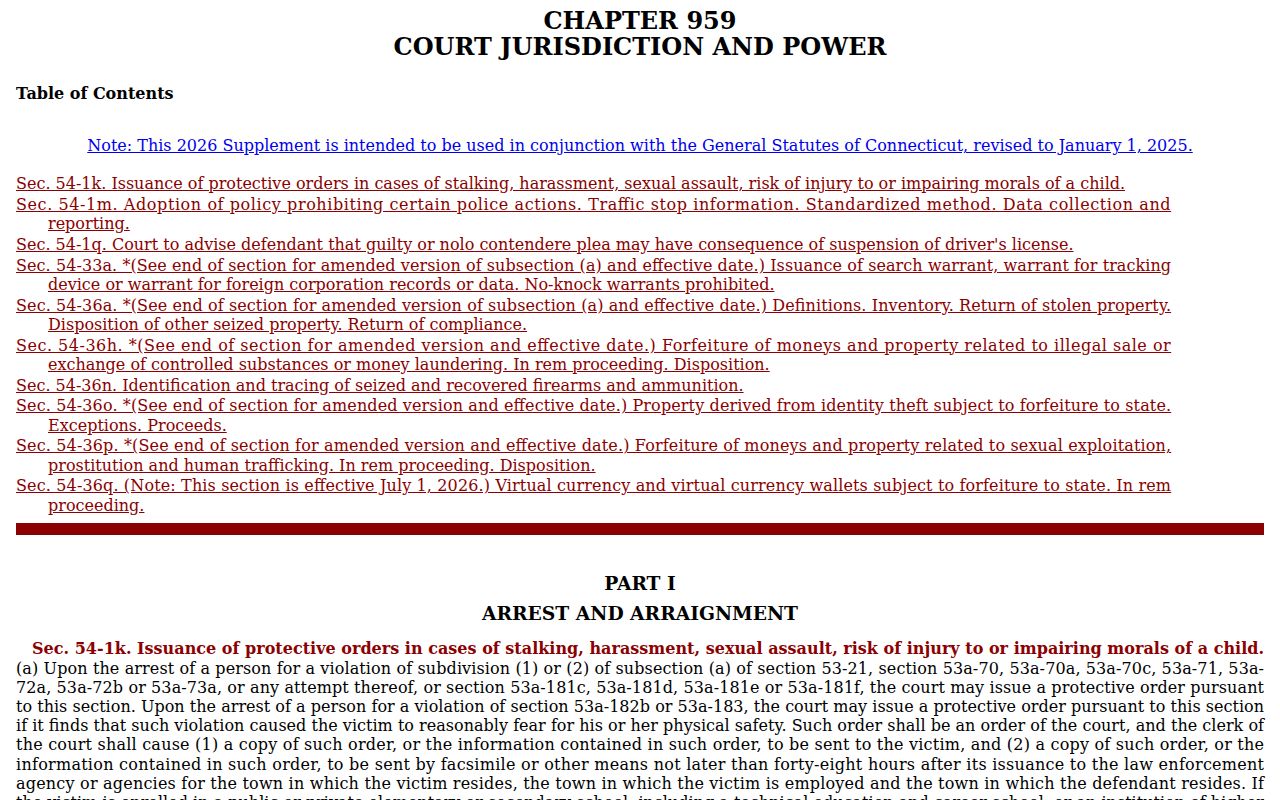
These provisions govern judicial process and system entry in Connecticut; they do not offer the public a self-service status screen.
Connecticut FTA Warrants: The 4 p.m. Rule
Connecticut applies a narrow timing rule to certain FTA process. Under C.G.S. §54-2e, a rearrest warrant or capias for a specified second-degree FTA may not issue before 4 p.m. on the date of the alleged failure unless the court finds good cause. The clock belongs to that statutory offense and process, nothing broader. This Connecticut rule is not a grace period for every court date. Nor is it a promise that no order can issue earlier in other kinds of cases. It does not replace checking the assigned court's record. If a missed appearance may have triggered a warrant, ask the clerk what order exists, when it was entered, and what appearance or motion the court wants next.
Scope: The 4 p.m. limit applies to specified FTA rearrest warrants or capias and includes a good-cause exception; it is not a universal rule for all warrants.
How Bench and Arrest Warrants Differ
Both orders can put a person in custody, and both move through Connecticut Superior Court criminal process. Their starting points differ. A Connecticut bench warrant answers a missed appearance or court obligation in a case already open. An ordinary arrest warrant grows out of an investigation and an application for judicial authority to arrest for an alleged offense. More on the second route appears in the arrest warrant lookup.
| Feature | Bench Warrant | Arrest Warrant |
|---|---|---|
| Trigger | A missed Connecticut court appearance or failure to comply with an order. | A Connecticut investigation followed by a request for arrest process. |
| Underlying Case | Usually an existing Connecticut case with an unmet court obligation. | A Connecticut criminal matter based on an alleged offense. |
| Issuing Authority | Connecticut Superior Court judge or authorized judicial authority. | Connecticut Superior Court judge or authorized judicial authority. |
| Next Step | Ask the Connecticut issuing court about appearance, recall, or other process. | Confirm the Connecticut order, case, and release terms with court and police. |
These Connecticut labels describe the route, not a public status code. The clerk can identify the order in the case file, and the responsible police agency can confirm its service record.
Connecticut Bench Warrant Public Search Limits
Connecticut's Judicial Branch public Arrest Warrants portal is a narrow window, not a complete bench-warrant search. It covers specified violation-of-probation matters and orders to incarcerate, and its own notice says failure-to-appear warrants are not being displayed until further notice. Statute and safety exclusions trim the list further. A blank result does not establish that no Connecticut court process exists. The Connecticut public portal's search form and its scope notices sit at that link.
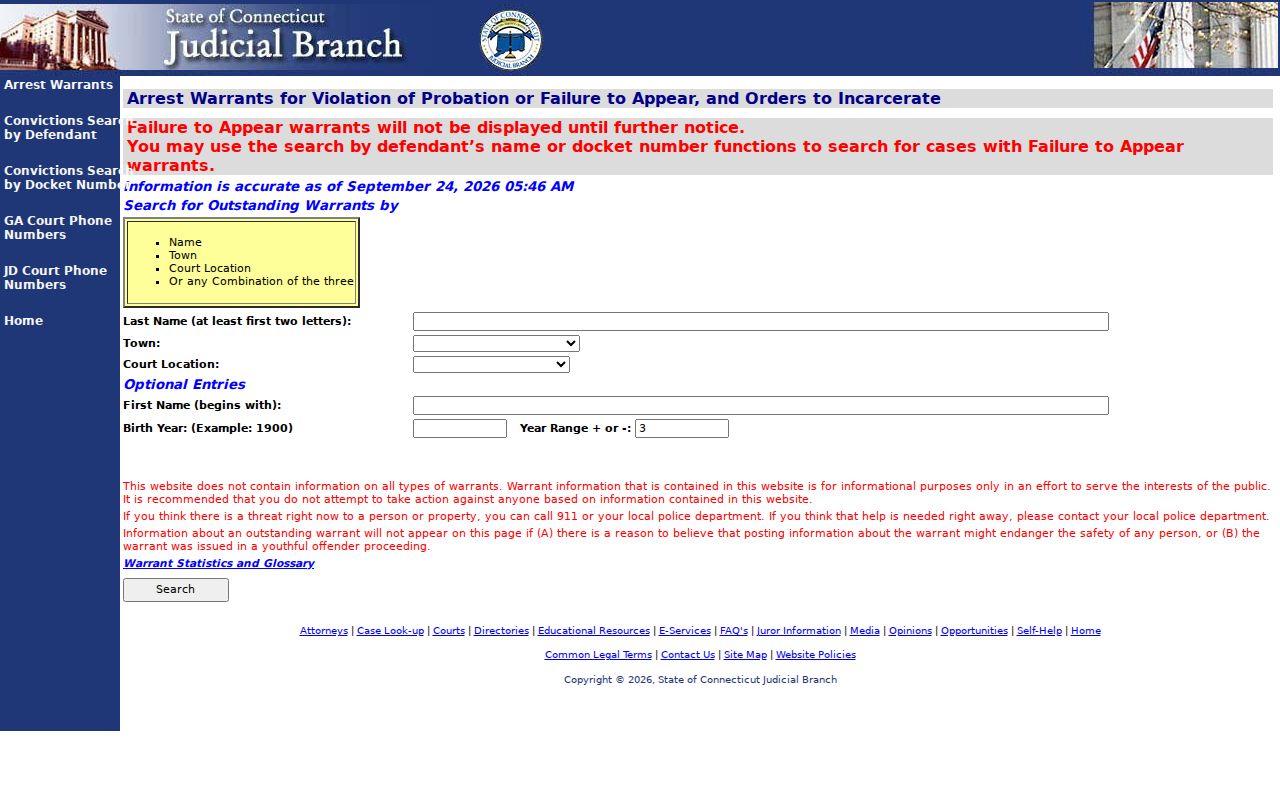
Treat any public result as a lead, nothing more. The Connecticut court clerk can verify current judicial status. The law-enforcement agency can verify whether a warrant was served. The state's pending criminal and motor-vehicle case lookup can help locate a docket number. It is not a live warrant certification, though. Sealed, restricted, and newly issued Connecticut records may not show up at all. On the entry side, Connecticut C.G.S. §54-2d covers specified rearrest and VOP warrants in the network. When that network is available and accessible, the law-enforcement agency for the person's municipality of residence must enter a notation of actions taken within 30 days. That 30-day clock is an internal agency duty. It sets no deadline for a public page, and it promises nothing about online warrant status.
Capias Means Different Connecticut Court Processes
Capias is a court command for arrest, and Connecticut uses the word in more than one setting. A criminal capias can stand in for a rearrest warrant in certain failure-to-appear process. A family-support capias, or capias mittimus, is a civil enforcement order instead. The label alone never tells you which court or agency holds the record. Service duties differ too. The State Marshal Commission lays out civil process and civil-capias service in its official FAQ: state marshals serve those civil orders, while criminal bench warrants belong to local police or Connecticut State Police. Judicial Marshals handle courthouse security and prisoner movement, a separate role entirely. The Commission's explanation of civil capias and criminal warrant service draws the same line between the two.
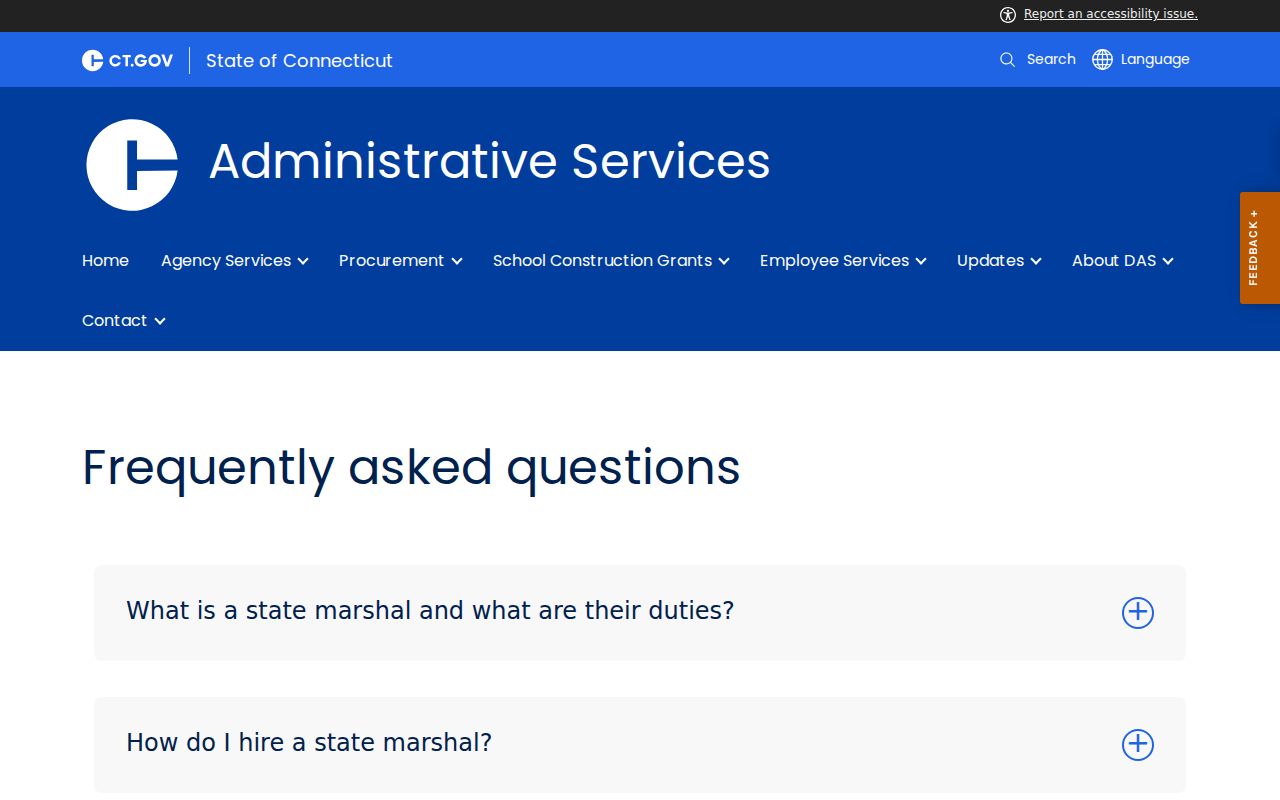
Read the case type first in Connecticut. Knowing whether the matter is criminal or civil keeps a bench warrant question from landing in the civil-process system.
- FTA
- Failure to appear for a required court event; depending on the case, it can lead to court process, a separate charge, or another consequence.
- Capias
- A court command for arrest, including a substitute for a rearrest warrant in specified Connecticut FTA cases.
- Capias mittimus
- A civil or family-support enforcement order; it is not interchangeable with a criminal FTA warrant.
Clearing a Bench Warrant in Connecticut
Only the issuing court can clear a Connecticut bench warrant. The judge decides whether to recall it, set a new date, impose release conditions, or require an appearance. The state has no amnesty, no standard walk-in event, no universal surrender desk, and no uniform bench-warrant bond schedule. A lawyer can advise on a motion to recall or quash and help arrange the appearance. "Recall" means the court withdraws the order. "Quash" means it sets the process aside.
- Check Connecticut's public VOP portal and pending docket for leads, while treating both as incomplete.
- Contact the assigned Connecticut Superior Court Clerk's Office and ask whether a warrant or capias is active, which hearing or motion is required, and whether the court set release conditions.
- Ask the clerk which police agency is responsible for service. Contact assigned Adult Probation or Court Support Services for a VOP matter; contact Connecticut's CIB and court for a ticket matter.
- Discuss an appearance, surrender, or motion with counsel where appropriate, then follow the Connecticut court's directions about time and location.
- Keep the signed order or disposition and ask the Connecticut court and responsible police agency to confirm that their records reflect the action.
Caution: Do not assume a Connecticut warrant disappears with time or payment. Police may serve active process during an encounter; verify any court action with the clerk and responsible agency.
An old fine or DMV fee paid today may not recall a separate Connecticut warrant. Treat them as distinct. If a ticket suspension is involved, confirm the case with the court and check license status with DMV on its own.
Missed a GA Date? Connecticut Bench Warrants
Missed a criminal or motor-vehicle date at a Connecticut Geographical Area location? Start with the docket and the assigned clerk. Ask three things: whether the court issued a warrant, rearrest warrant, or capias; whether a new FTA charge is listed; and whether the judge set a bond or another release condition. The clerk explains filing and appearance logistics, not legal strategy. A docket event alone does not prove a warrant was served or recalled. The pending criminal and motor-vehicle case lookup helps identify the docket and court location. For a Connecticut probation matter, contact the assigned Adult Probation or Court Support Services office along with the court. For an infraction, ask the CIB or the assigned GA about the ticket route. A DMV suspension notice raises its own question: what court action is needed, and confirm the license record with DMV separately. Sequence depends on case type. No generic county surrender or bond counter fits every matter.
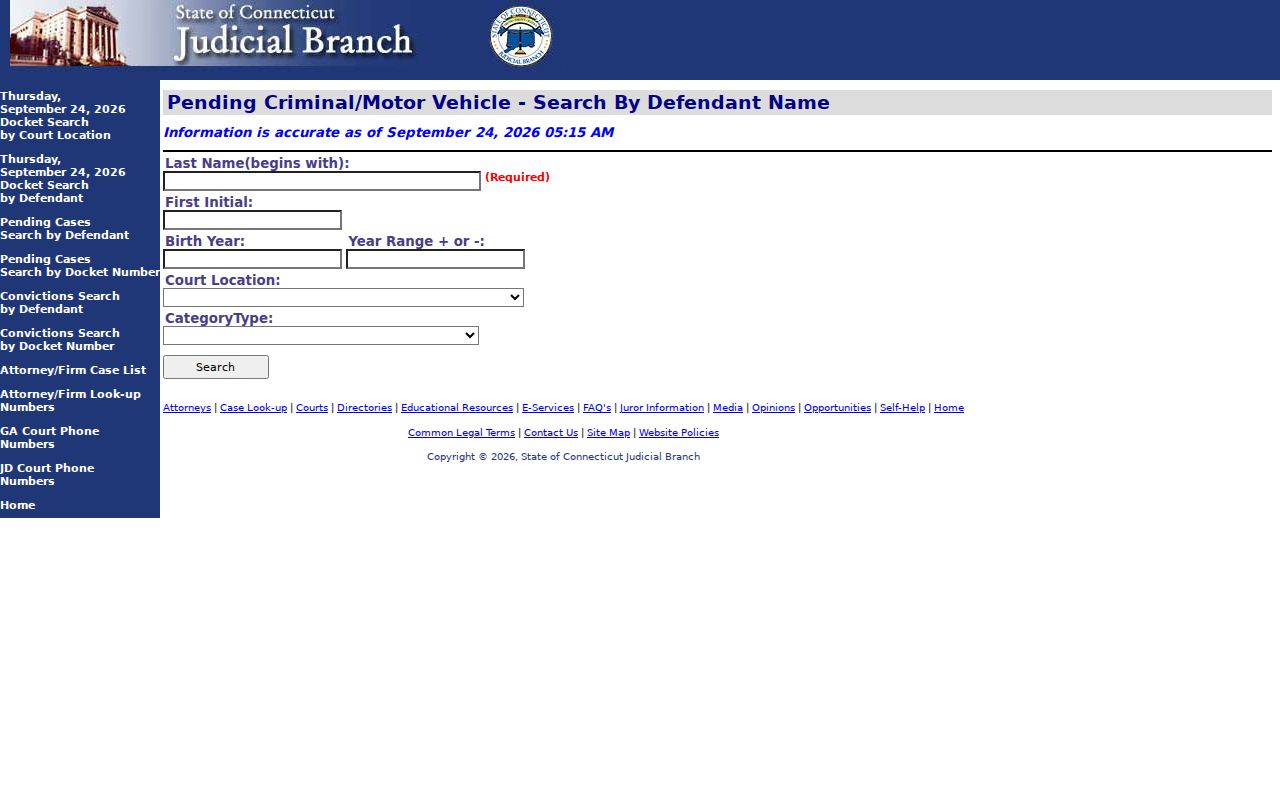
That form locates public case information only. A clerk must confirm whether a separate Connecticut bench warrant or capias remains active.
Connecticut Courts That Issue Bench Warrants
Criminal bench warrants come from Connecticut Superior Court, the state's one unified trial court of general jurisdiction. Geographical Area locations handle many arraignments, misdemeanors, motor-vehicle matters, and infractions requiring an appearance. Judicial District locations hear the major criminal matters. The docket's assignment decides which Clerk's Office keeps the file. Hartford and Waterbury Community Courts are Judicial Branch locations within Superior Court, not standalone city courts. Connecticut has no municipal criminal court, no justice-of-the-peace court, no county criminal court, and no county sheriff warrant office. Family Support Magistrates handle support proceedings inside Superior Court, and civil capias process follows its own path. Route by municipality through the Browse Counties directory. Then use the Judicial Branch court directory to identify the assigned GA or JD clerk. For criminal service questions, contact the responsible local police department or Connecticut State Police, never a county office.