
Connecticut Warrant Checks
Your first stop is the Judicial Branch Arrest Warrants search. It covers only a narrow public group: violation of probation (VOP), failure to appear (FTA), and orders to incarcerate (OTI). A live notice on the page says FTA warrants will not be displayed until further notice. Connecticut's Judicial Branch also cautions that the form leaves out many warrant types and that a result is no reason to act against anyone. So treat a blank result as a prompt to follow up, not as an answer.
- Search the public VOP page using the name and, where useful, town or court location. Read its scope notice before treating a result as complete.
- Use the pending criminal and motor-vehicle case lookup to locate a public case by docket or defendant details. A docket is not a warrant register.
- Find the assigned Superior Court GA or JD through the Judicial Branch directory. Ask the Clerk’s Office whether the court order remains active and what steps apply.
- Ask the responsible town police department or Connecticut State Police about its service record. Connecticut has no county sheriff warrant desk.
- For a ticket, check CIB and the court separately from DMV license status. For a federal matter, use the federal court and U.S. Marshals channels.
A clerk at the Connecticut court can trace the case path. What the clerk cannot do is give legal advice. If an outstanding warrant turns up, ask the court directly whether counsel, a motion, an appearance, or a court-directed surrender is required. The Connecticut warrant check channels page lays out the public forms and where each one stops.
Connecticut Portal Fields
The public Arrest Warrants page is a form for a narrow set of court matters, not an all-purpose statewide warrant database. Connecticut visitors will find no county selector and no police-agency selector. The page displays an as-of time but no update schedule, result limit, export option, account, or registration control. Its FTA notice shapes what the form can tell you on any given day.
| Public VOP field | Use | Limit |
|---|---|---|
| Last name | Required; enter at least the first two letters. | No warrant number field is shown. |
| Town | Optional place-name filter. | It is not a county selector. |
| Court location | Optional GA, JD, or listed court-location filter. | It does not name a serving agency. |
| First name | Optional beginning-of-name search. | It is not a full identity match guarantee. |
| Birth year and range | Optional year and plus/minus range. | The form does not define a universal status code. |
Connecticut's town menu carries place labels, including historic and unincorporated names. The court menu lists Judicial Branch locations instead. Neither menu maps sheriff jurisdictions. A separate pending-case form requires a last-name prefix, while the first initial, birth year, range, court, and case category stay optional. These fields help locate a docket, but they will not confirm whether a separate process order has been recalled or served.
Connecticut's Statewide Warrant System
Connecticut's main statewide warrant technology is PRAWN, the Paperless Arrest Warrant Network. The Judicial Branch calls it an electronic system for managing and serving court arrest warrants. Authorized users can query detailed warrant data and the responsible agency, then run custodial processing to serve a warrant and print custody documents. Residents cannot register for it or reach its inquiry screen. The public VOP search is a different animal. It exposes a limited set of publicly available warrant information and carries category, safety, and youth-related limits, and a searchable name form does not open PRAWN's agency records. The Judicial Branch statistics glossary also notes limits in PRAWN's coverage of warrants requested by municipal and state law-enforcement agencies. Connecticut warrant records therefore do not sit in one complete public index, and the Connecticut warrant database overview explores each application and its public reach. The actual court order stays with the issuing Superior Court, and local police or CSP can confirm the service-side record. PRAWN's participating-agency count measures authorized access, not the number of warrants or records a member of the public can see.
How Connecticut Warrants Move
A typical Connecticut court-warrant path starts with an application or court action, then moves through a court record and authorized law-enforcement channels. For an arrest warrant, the Judicial Branch describes entry in the Criminal Motor Vehicle System followed by immediate transmission to PRAWN. Police departments and State Police can use authorized interfaces directly or through systems such as COLLECT and CISS. This is agency workflow. It is not an online service for residents. The Judicial Branch's PRAWN page presents the named program and its professional purpose, not a public warrant result or a sample record. Open the official Connecticut PRAWN program description to see how the Judicial Branch characterizes the network.
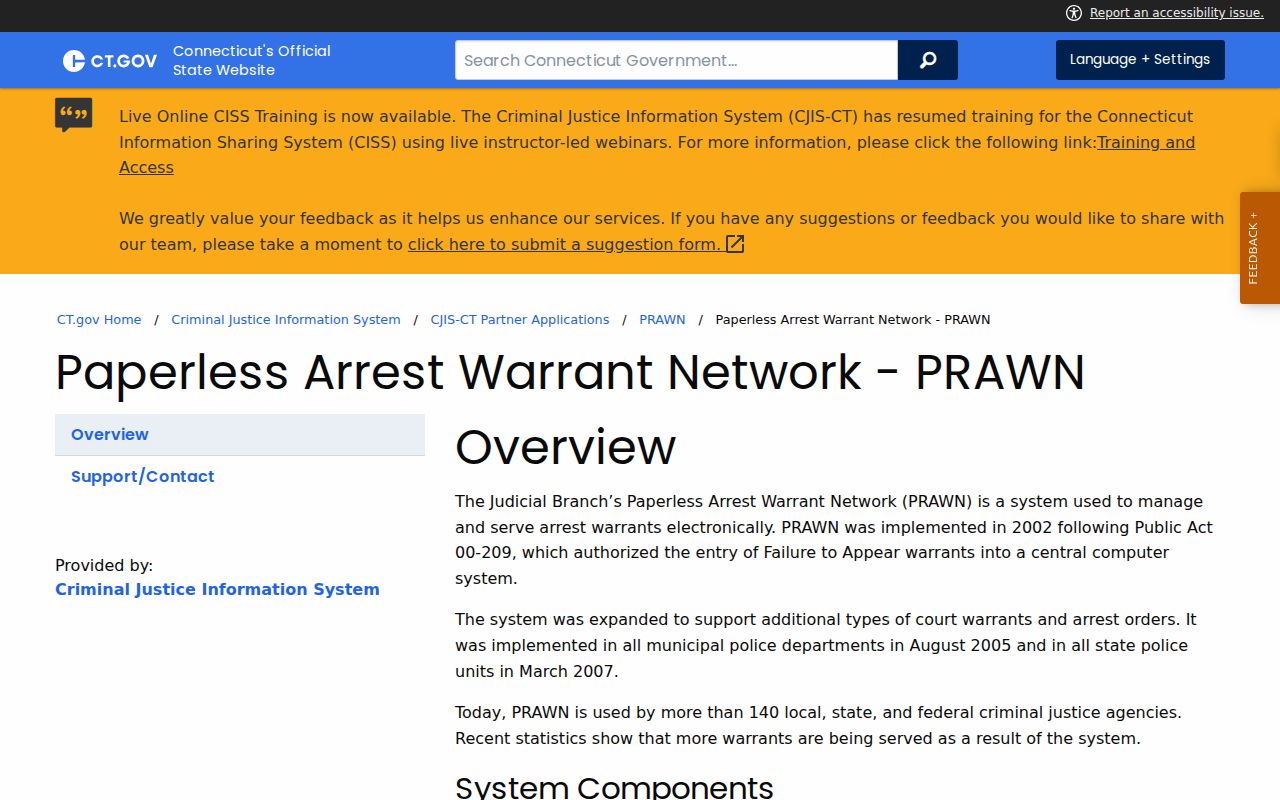
That page names a system, not a warrant search entry point. A resident checking a case still needs the public court tools plus direct confirmation from the assigned clerk and serving agency. For a town-originated case, the municipality helps identify the local police agency, while the docket identifies the GA or JD court location. County lines do not determine service, and a DMV notice on a traffic case is a separate administrative record.
Warrants in Connecticut: The Main Types
Connecticut uses several kinds of judicial process, and their names can blur in everyday speech. What matters is the issuing authority and the reason. A bench warrant or rearrest warrant usually traces back to a missed court obligation, while an arrest warrant follows a criminal investigation and judicial review. A search warrant allows a defined search under separate legal standards. A capias may appear in specified court matters, and family-support capias process is civil and distinct.
| Process | How it arises | Connecticut route |
|---|---|---|
| Arrest warrant | Police or CSP applies for judicial process in a criminal investigation. | Superior Court authority; local police/CSP service. |
| Bench or rearrest warrant | A court appearance or order is missed, or another statutory trigger applies. | Superior Court GA/JD and the relevant service agency. |
| Search warrant | A sworn application supports a defined search under C.G.S. §54-33a. | Judicial approval and the law-enforcement applicant. |
| Capias | A court command for arrest used in certain statutory settings. | Superior Court process; confirm its specific purpose with the clerk. |
| Civil support capias | Family-support or contempt process under the governing order. | Family Support Magistrate/Superior Court and, where directed, State Marshal service. |
A missed ticket and a missed court date are not the same thing in Connecticut law. The statutes split them apart. Infractions, failure-to-appear charges, VOP allegations, and DMV reporting each sit under separate rules. The label alone never settles the status or the release terms; the court that issued the process does.
Connecticut Courts and Police
Connecticut runs one criminal trial court: the Superior Court. Judicial District sites handle major criminal and district-level cases. Geographical Area courts take arraignments, misdemeanors, motor-vehicle matters, and many other criminal cases. Hartford and Waterbury Community Courts are Superior Court locations, not city courts. Probate runs on its own limited track. It creates no local criminal warrant court. On the enforcement side, local police departments serve the warrants tied to their cases and may execute court process anywhere in Connecticut. Connecticut State Police work their own cases, cover towns that rely on troopers, and partner with local agencies. State marshals play a different role entirely. Their work is civil process and certain civil capias matters. Judicial Marshals handle courthouse security and prisoner movement. Connecticut has no county sheriff office to bundle these jobs together. The Secretary of the State confirms that Connecticut's county names are geographic only, with no county seats and no active county government. Read the Secretary of the State's county history for the official account of that geography.
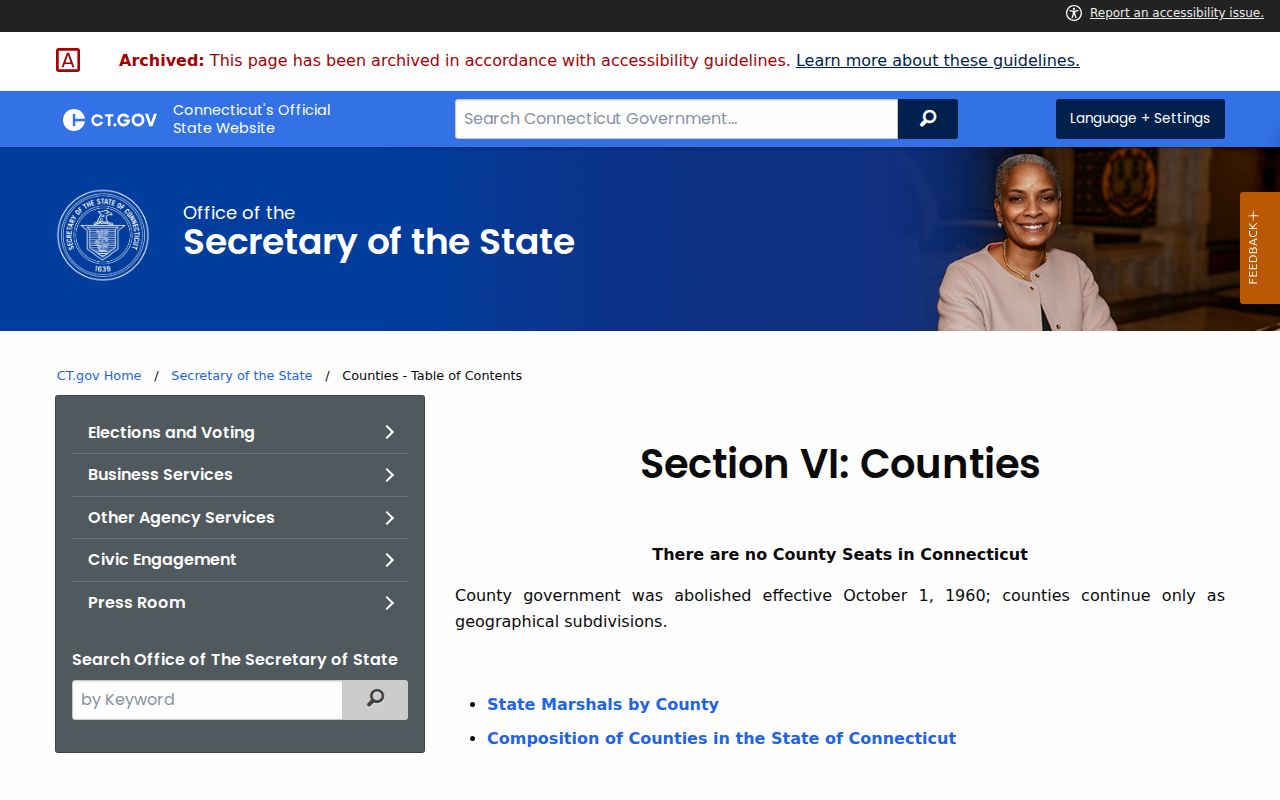
Old county names help you orient. They will not name the clerk or the officer holding a criminal warrant. Use the town and the case location to find the proper Connecticut Judicial Branch clerk and the local police contact.
Connecticut Warrant Records: What They Show
Connecticut publishes no single public warrant-record format. The public VOP page offers search filters and may post whatever the statute allows. A pending docket can show a docket number, court location, category, public case events, and status information where available. A docket number is not a warrant number. The Judicial Branch has released no universal Connecticut warrant-number format. There is nothing fixed for the public to decode.
| Person or case | A public VOP listing may show name and other allowed fields; no real person row was copied for this reference. |
|---|---|
| Docket number | A court case identifier that can help a Clerk’s Office retrieve the file. It is not a warrant ID. |
| Issuing location | The GA or JD court location shown in court material, when disclosed. |
| Warrant number | No statewide public number format was located; do not infer one from a docket number. |
| Bond and charge | Case-specific judicial information; not promised by the public VOP search. |
| Service or clearance | PRAWN and agency service details are restricted; confirm separately with court and police/CSP. |
Words like active, served, recalled, and quashed stay ordinary descriptions until an official Connecticut record supplies the status. A record may be sealed in whole or in part. A blank portal result proves nothing about a recall. Old entries can also miss a later court action. Only the issuing court can confirm what stands. Note: keep a case docket identifier separate from a warrant identifier unless the issuing court confirms how the order is numbered.
Connecticut Warrant Terms
Connecticut warrant terms track the court process behind them. A word may hint at why the court acted. Only the issuing court can say whether an order still stands. Be careful with capias on an old record, because criminal process and civil support enforcement are different things.
- FTA
- Failure to appear at a required court proceeding. It may lead to court process and, in defined cases, a separate criminal charge.
- VOP
- Violation of probation. A judge may issue process under C.G.S. §53a-32; the public portal shows only an allowed subset.
- OTI
- Order to incarcerate, a court term used in the Judicial Branch warrant glossary for specified unsatisfied matters.
- Capias
- A court command for arrest. Connecticut law permits capias in certain failure-to-appear cases; it is not automatically a civil writ.
- Capias mittimus
- A civil/family process that can direct detention or appearance in support or contempt matters. It is not the same as an ordinary criminal warrant.
- Recalled or quashed
- A court has withdrawn or set aside process. Confirm the order and ask whether the service agency has updated its record.
A family-support capias may involve the State Marshal Capias Unit. That role stops at civil process. A state marshal is not the contact for a criminal arrest warrant; for that, find the Connecticut Superior Court location and the local police or CSP agency. For a ticket, keep the response, the court order, and your DMV license status in separate piles.
Warrant Record Access Under Connecticut Law
Access starts with the record holder. The Connecticut Freedom of Information Act generally covers public-agency records. Criminal investigations, protected juvenile or youthful-offender matters, and sealed court material can be withheld or redacted. Docket access follows Judicial Branch rules and sealing orders. The online docket carries a warning. It is not the official court record, so treat a case display as a lead. These statutory sources explain the main boundaries for Connecticut warrant records:
Key Rules:
C.G.S. §1-210(a) sets the general prompt-access rule for covered public-agency records, subject to exemptions and other laws.
C.G.S. §1-215 defines parts of the arrest record, including a warrant application after arrest, subject to sealing and exceptions.
C.G.S. §54-108c provides for specified public VOP information while allowing omission for safety risks and youthful-offender cases.
C.G.S. §54-33c addresses search-warrant applications and returns, with restrictions for protected information.
Direct each public-record request to the office that holds the record. Police records belong with the local Connecticut department or DESPP. A case-file question goes to the Superior Court Clerk's Office. DESPP Reports and Records accepts certain State Police report requests through GovQA. That process will not confirm active-warrant status. If an agency denies access, Connecticut FOIA offers a separate complaint path through the Freedom of Information Commission.
Connecticut Traffic Defaults
One Connecticut ticket can spawn several records. CIB handles eligible ticket responses and payments. A missed response can return the matter to Connecticut Superior Court, and certain failures bring separate criminal or administrative consequences. Under C.G.S. §14-140, a qualifying court report can prompt DMV to send a notice and allow a motion to reopen. A suspension is a driver-privilege record. It is not a Connecticut arrest warrant. The CIB entry form asks for a ticket number and check digit, plus the first three letters of the last name or company name. Electronic tickets may take three to five business days to appear. Handwritten ones can take five to seven. If your answer date has passed, contact CIB or the issuing court. A delayed online entry is not an extension. Open the official Connecticut ticket lookup to see the ticket and check-digit entry form itself.
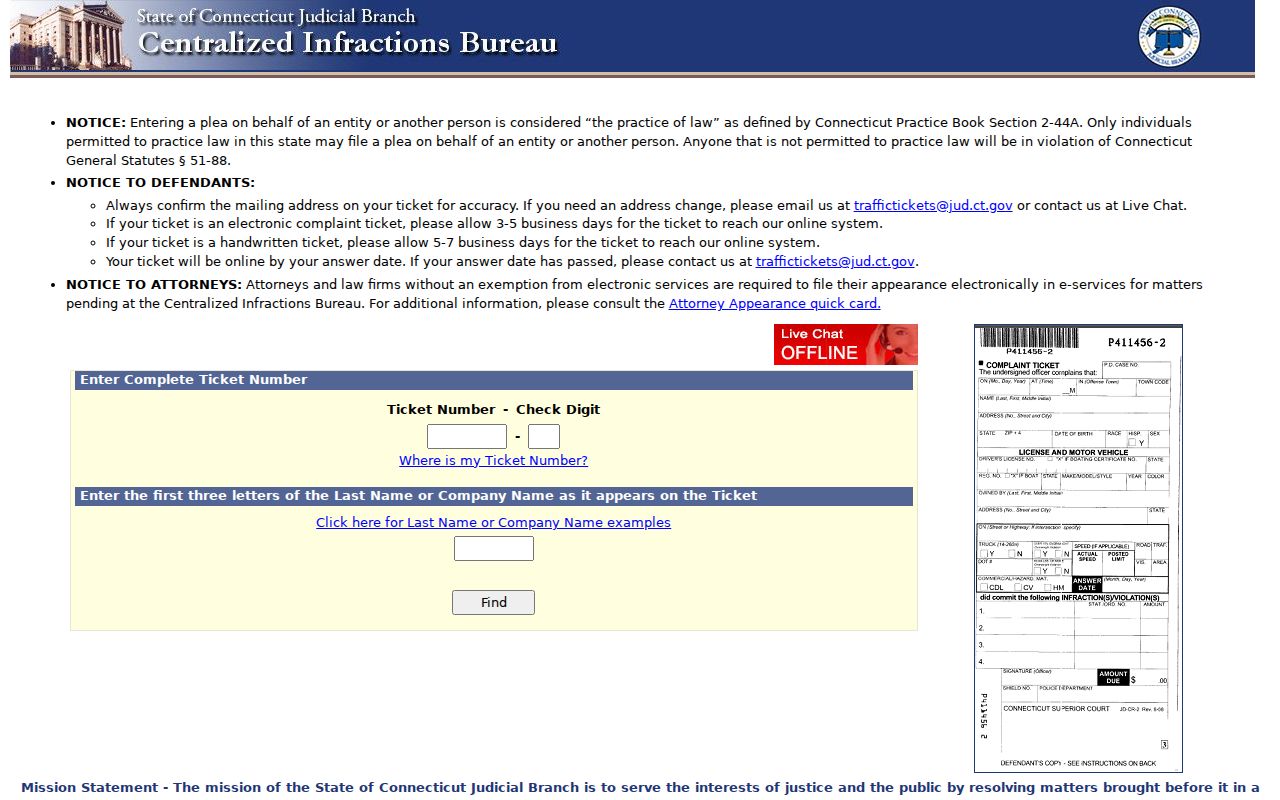
A ticket search answers a ticket question. It is not the public VOP portal. Connecticut's ticket form offers no county filter and no warrant-status filter, so a result alone tells you nothing about police service. DMV gives you 60 days to reopen before suspension takes hold. The court may charge a $40 reopening fee and can waive it, and DMV separately lists a $175 reinstatement fee once a suspension has started. Those payments go to different offices, so check which one wants your money before you send it. The DMV notice spells out the reopening and restoration route, and the official page explains the whole unpaid-ticket suspension process. Read the DMV unpaid-ticket suspension instructions before you rely on either fee figure.
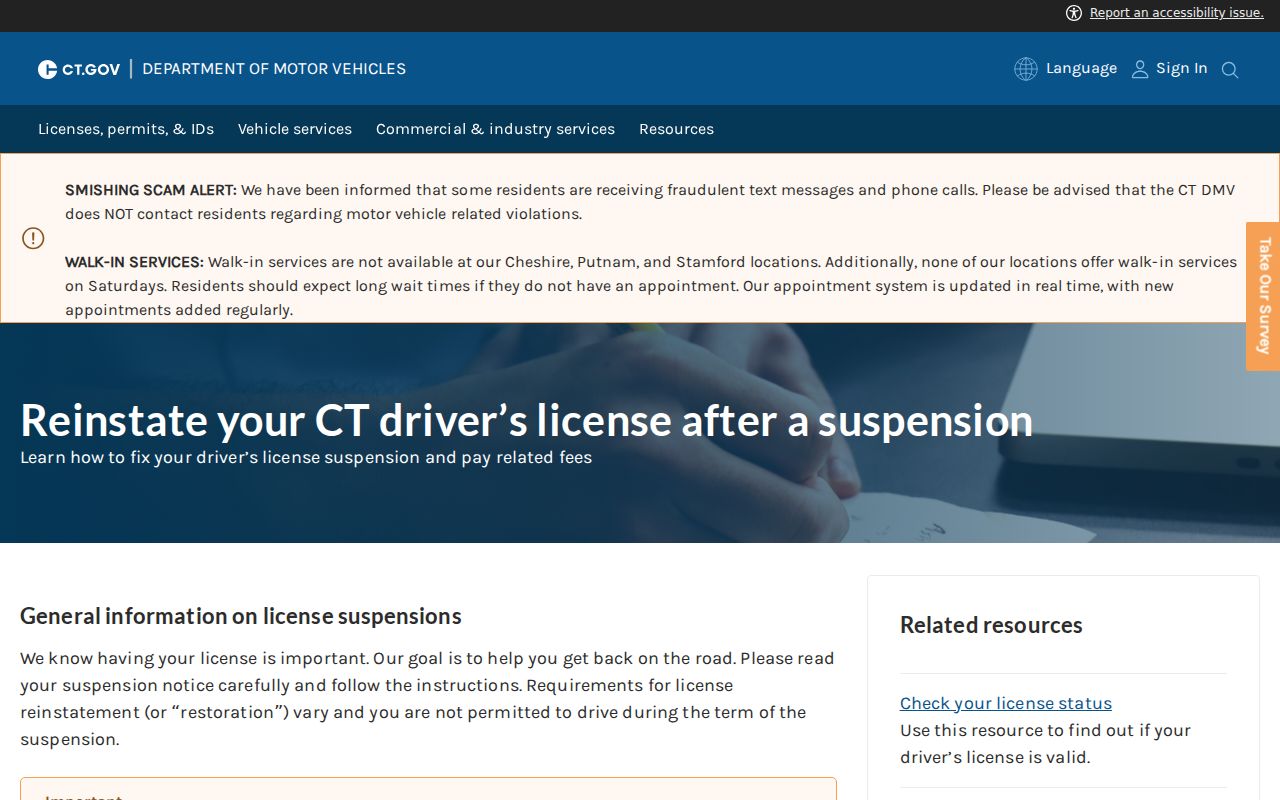
Reopening a Connecticut traffic ticket does not recall a separate criminal warrant. Keep the court disposition and the DMV status confirmation in separate files.
Warrant Records by County in Connecticut
Connecticut keeps eight historic county names but no county government beneath them. There are no county seats, no county sheriff offices, and no county criminal courts. The names still help you get your bearings on a map. A live warrant question instead follows the municipality and the Superior Court location assigned to the case. Six of the most populous historic counties appear below as geographic routes. Each county site sits inside a wider directory that also covers cities and towns, so none of these links implies a sheriff jurisdiction.
Fairfield County
957,419 residents in 2020; largest historic county by population, with no county seat.
Hartford County
899,498 residents in 2020; Hartford GA/JD are Superior Court locations, not a county court.
New Haven County
864,835 residents in 2020; local police/CSP serve criminal process, not a county sheriff.
New London County
268,555 residents in 2020; towns route to assigned court locations.
Litchfield County
185,186 residents in 2020; Litchfield JD and Torrington GA are state court locations.
Middlesex County
164,245 residents in 2020; confirm the court by docket location.
Want the complete list? Browse the full directory of all 27 Connecticut locality and historic-county sites and pick the destination matching your town or area. The clerk who holds the file and the agency that serves the warrant still depend on the specific case, not the old county line.
Resolving a Connecticut Warrant
Connecticut runs no single statewide surrender counter, recall form, or amnesty program that clears every warrant. Your route depends on the issuing court, the type of process, and the agency asked to serve it. Begin with the court docket and the limited public warrant page. Then call the GA or JD Clerk's Office with pointed questions. Ask whether the court shows active process, what appearance or motion is required, whether a bond or release condition was set, and which police agency holds the service record. Those four answers map your next step.
- Save the citation, docket number, notice, or court paper that identifies the matter.
- Ask the clerk to confirm the order and the current court procedure; a clerk can route filings but cannot choose a legal strategy.
- Contact assigned Adult Probation for a VOP matter, CIB or the court for a ticket, or local police/CSP for service status where appropriate.
- Discuss an appearance, motion, bond, or surrender plan with counsel when needed.
- Keep any signed recall or reopening order and ask the court and service agency whether each record has been updated.
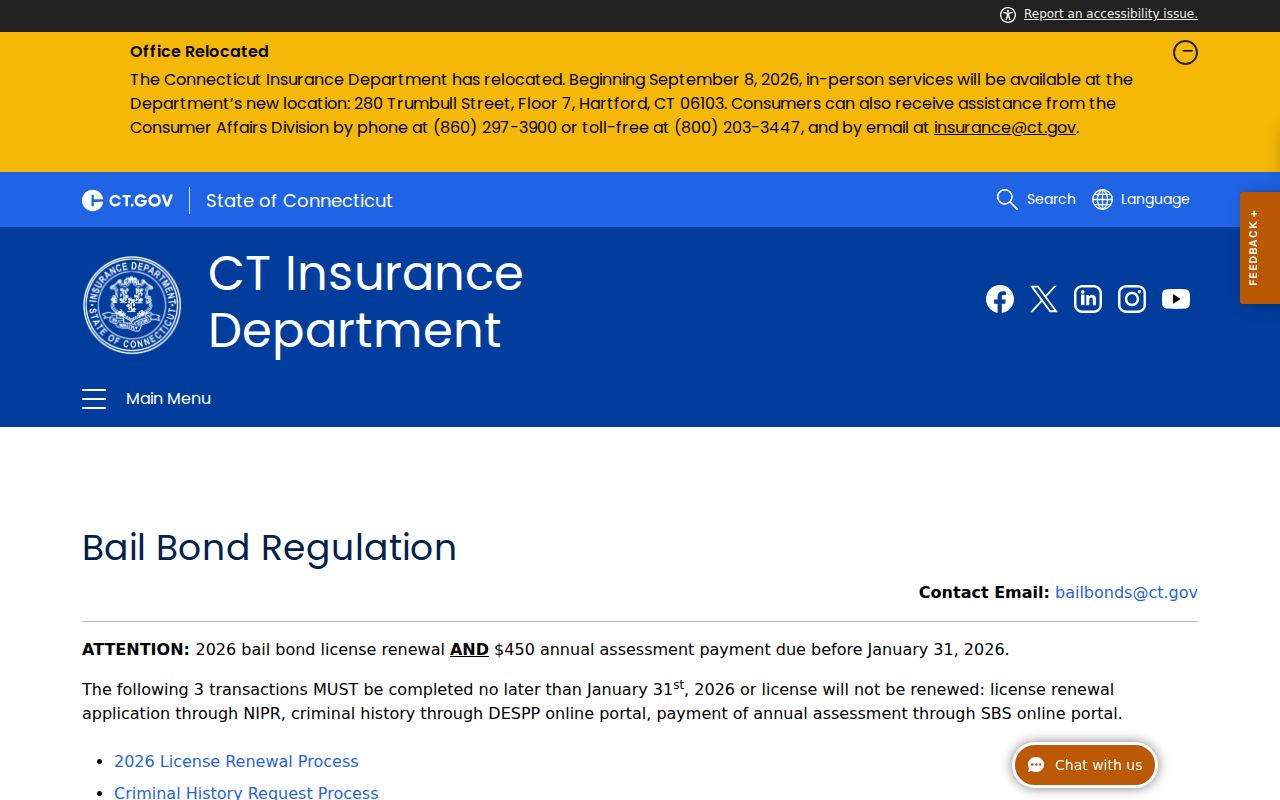
Money alone rarely settles it. Posting bond, paying a ticket, or paying a DMV reinstatement fee does not necessarily withdraw a separate warrant, and a returned online result can lag behind an order. No public update schedule is promised. The court's decision and the agency's service record are related but separate parts of confirming where things stand. Bond is also case-specific. Connecticut's Insurance Department regulates surety bail agents and their rates, but it publishes no single bond amount for every warrant. The regulator's public bail-bond page covers that oversight role, not any particular person or any promise that a bond agent can clear a case. Review the Connecticut Insurance Department bail-bond regulation page for the regulatory context.
A Connecticut lawyer can weigh whether a motion, a court appearance, or another lawful step fits your case. Waiting rarely makes active process disappear.
Connecticut Warrant History
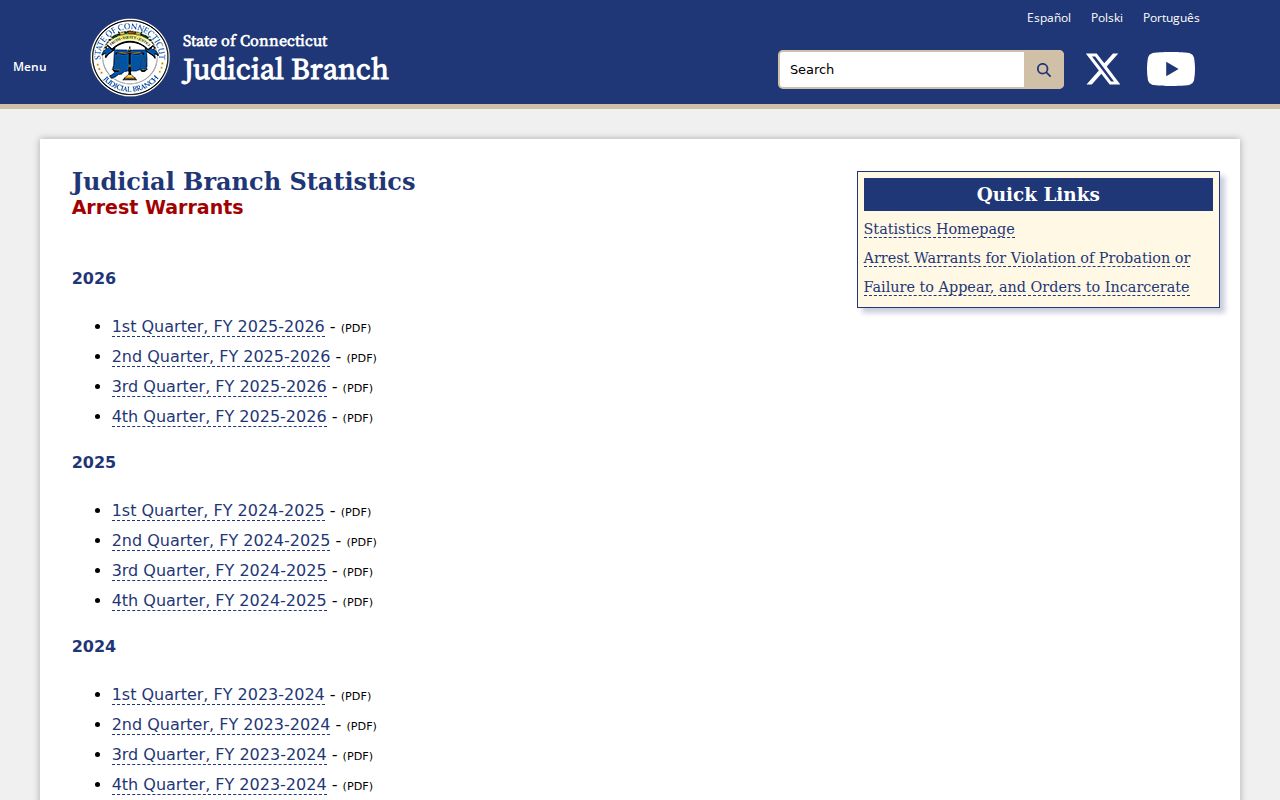
Connecticut's current setup came from several institutional shifts over the decades. County government ended in 1960, though the names survived as geography. County sheriffs were abolished in 2000, pushing civil service duties to state marshals while the Judicial Branch took over courthouse security and prisoner transport. Criminal process now runs through the unified Superior Court, not a county or municipal criminal court. Then came PRAWN in 2002. Legislation that year called for centralized electronic handling of failure-to-appear warrants. Municipal police connectivity was expanded by August 2005, and State Police units joined by March 2007. More than 140 criminal-justice agencies now use the system, a figure describing agency access rather than warrant counts or public coverage. The Judicial Branch also publishes quarterly statistics on FTA warrants. Those aggregate reports cover periods and categories, and they cannot confirm whether a named warrant is active. The report page collects the official links plus a glossary for reading the counts. View the Judicial Branch FTA statistics page for the reporting series.
Recent legislation touched two separate corners of this system. In 2024, Public Act 24-108 modernized electronic signing and verification for warrants and related documents. That change concerns court paperwork, not public search access. Public Act 25-159 later revised notice and reopening steps for certain traffic matters. Its defined seven-year disposition is not a rule that all warrants expire. Technology and traffic reforms changed pieces of the process in Connecticut, but the need to verify an individual case with its court and agency still stands.